10 Tips for Getting the Best Results from Home IPL Hair Removal in the UK
Home IPL (intense pulsed light) hair removal has become genuinely practical in recent years. The technology works—but only if you're using it properly. Getting results depends far less on which device you buy than on how consistently and carefully you use it. Here's what actually makes the difference.
1. Prepare your skin properly before each session
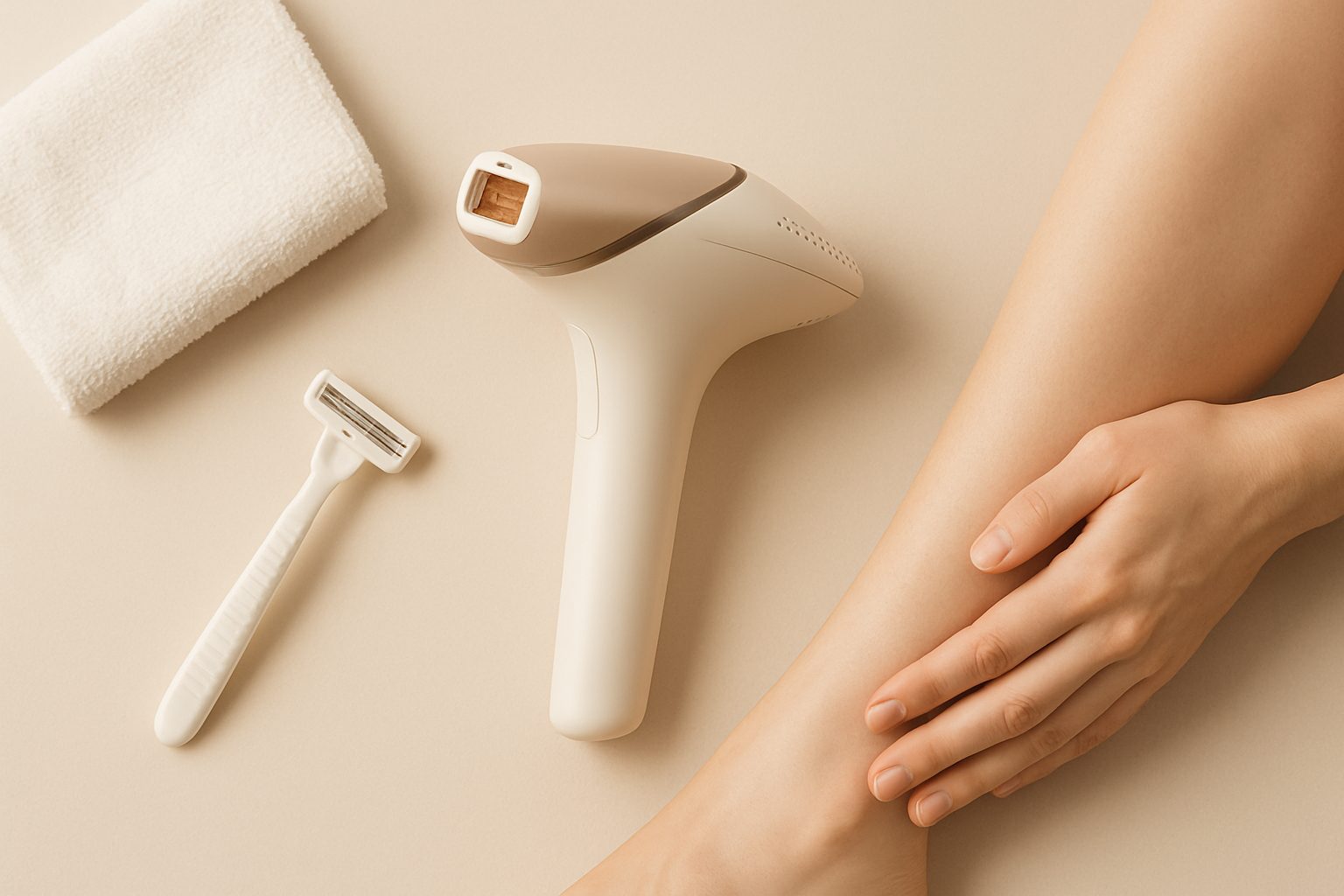
The hair needs to be there, but the skin surface needs to be clean and smooth. Shave 24 hours before your IPL session—not the day of, and definitely not a few days before. This timing ensures stubble is gone without raising the skin or causing irritation that the light can trigger.
Skip exfoliation on your treatment day. Your skin doesn't need to be buffed to be receptive; exfoliating can increase irritation risk. A gentle cleanser and a splash of water is enough. Avoid deodorant, perfume, and moisturiser on the area you're treating—these can sit on the skin and cause uneven light absorption.
2. Shave, never pluck or wax
IPL targets the pigment in the hair root. If you pluck or wax before treatment, you've removed the root entirely, and there's nothing for the light to target. You need that hair root intact beneath the skin. Shaving removes only the visible shaft, leaving the root untouched.
This is non-negotiable for results. Plan your shaving around your IPL schedule so the two align properly.
3. Check your skin tone against the device specs
Not all home IPL devices work on all skin tones. Most mainstream devices (Philips Lumea, Braun Silk-expert, NIRA) are safe and effective on skin tones up to around Type IV on the Fitzpatrick scale. Some are narrower. If you're darker-skinned, check the device manual explicitly—not the marketing copy, the actual safety information.
Using IPL on skin that's too dark for the device increases burn risk without improving results. If your usual device isn't compatible with your skin, it's not a limitation of IPL itself; there are devices designed for deeper skin tones, but they're less common and often imported. Knowing your starting point saves you time and potential damage.
4. Space sessions at least 2 weeks apart
Hair grows in cycles, and IPL only affects hairs in their active growth phase. Treating every week doesn't speed results—it wastes time and risks skin irritation. Fortnightly sessions (every 14 days) align with how hair actually grows and give your skin proper recovery time.
Most people see meaningful reduction after 4–6 sessions spaced this way. After that, you'll likely need maintenance sessions once every 4–8 weeks, depending on your hair density and growth rate.
5. Avoid sun exposure before and after treatment
UV exposure makes your skin more sensitive to heat and light. Don't use IPL on tanned skin, whether from sunbathing or sunbeds. The melanin in your tan competes with the melanin in your hair root for the light energy, reducing effectiveness and increasing burn risk.
Ideally, avoid intense sun exposure for at least a week before treatment. After treatment, your skin is extra photosensitive for 48 hours—use SPF 30+ sunscreen if you're going outside. If you're planning a beach holiday, schedule your IPL sessions well before travel or wait until you're back.
6. Use the device on the right setting for your hair colour
Lighter hair is harder to treat because there's less pigment for the light to target. Dark hair and dark skin is the gold standard for IPL because there's strong contrast. Blonde and red hair respond slowly or not at all to most home IPL devices—professional laser treatments may be more effective.
Most home devices have 3–5 intensity settings. Start at the lowest setting on a test patch, then work up if your skin tolerates it. You're looking for the highest setting that doesn't cause redness or discomfort the next day.
7. Treat consistently for the first 12 weeks
This is where most people give up too early. Hair reduction isn't visible after one or two sessions. You need to catch multiple growth cycles. Commit to fortnightly treatments for the first 3 months minimum. That's 6 sessions. After that, you'll see obvious thinning, and you can drop to maintenance mode.
If you skip sessions or space them randomly, you'll disrupt the growth-cycle targeting and get mediocre results. Consistency matters more than device cost.
8. Don't apply heat or irritants immediately after treatment
Your skin has just absorbed light energy. Avoid hot showers, saunas, and intense exercise for at least 24 hours. Heat compounds irritation. Also skip perfumed lotions, acids (like AHAs or salicylic acid), and retinoids for a few days post-treatment.
If you're feeling itchy after a session, cool water and plain moisturiser (cetaphil, CeraVe) are fine. Avoid anything that might sting.
9. Recognise that results plateau
Home IPL works best on dark, coarse hair on lighter skin. If that describes you, you'll likely see substantial reduction—sometimes 70–90% after consistent use. If you have fine, light hair, your results will be modest.
Also accept that you're unlikely to achieve permanent hair removal at home. Most people end up maintaining with sessions every 1–3 months indefinitely. It's hair reduction, not elimination. If you're expecting hairless skin forever, professional laser or electrolysis might be worth the cost.
10. Document progress with photos
Take pictures fortnightly in consistent lighting. Your eyes won't register gradual change week-to-week, but photos from month one versus month three show the difference clearly. This keeps you motivated and helps you adjust settings if needed.
Final thought
Home IPL delivers real results, but the device isn't doing the work alone. Your technique, consistency, and realistic expectations matter far more. Stick with the basics, stay patient, and you'll see the hair thinning noticeably within two months.
More options
- Philips Lumea IPL Hair Removal Series (Amazon UK)
- Braun Silk Expert Pro 5 IPL (Amazon UK)
- Ulike Sapphire Air3 IPL Device (Amazon UK)
- SmoothSkin Pure Fit IPL (Amazon UK)
- Remington iLight IPL Hair Removal (Amazon UK)