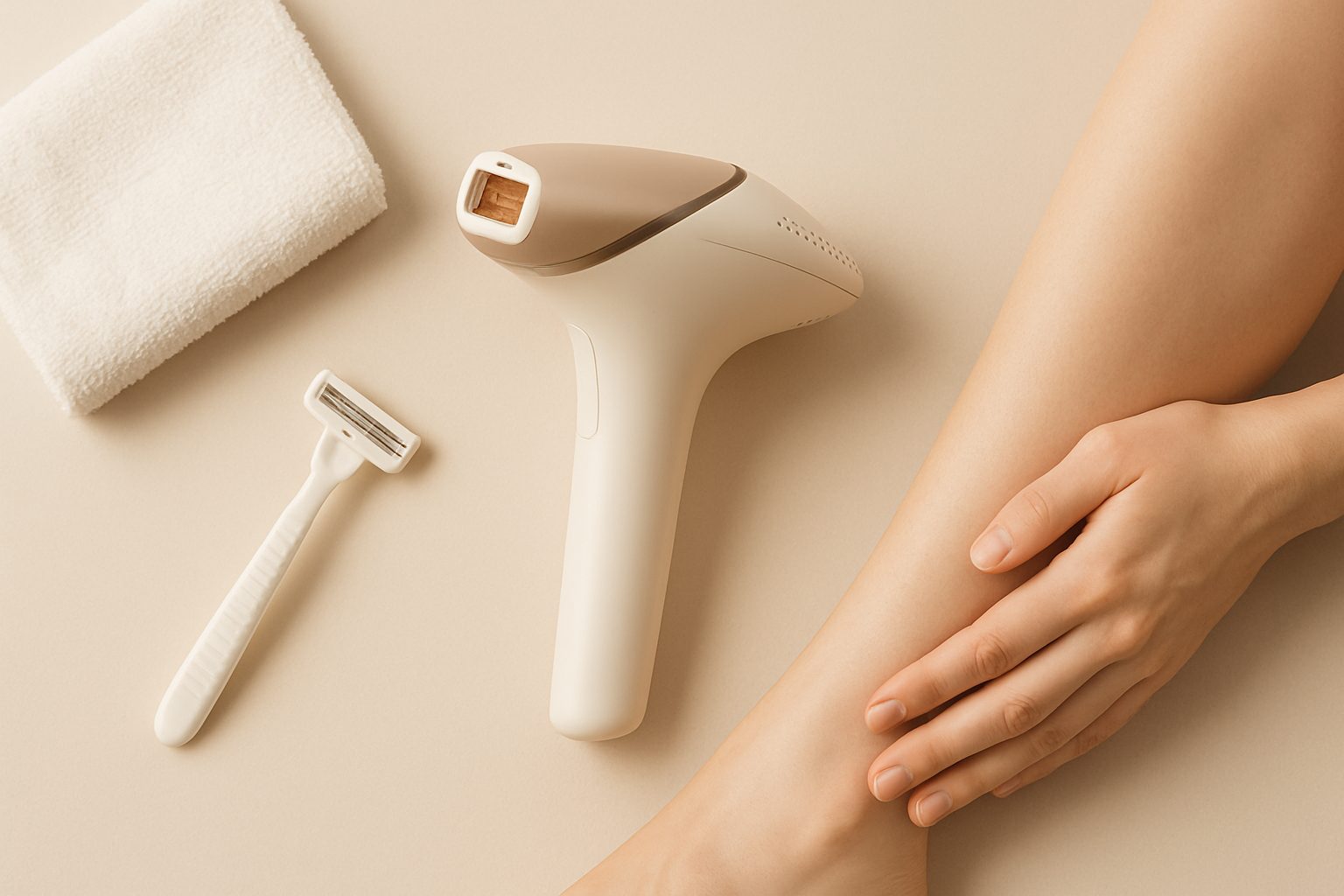
Home IPL Devices with Built-in Skin Tone Sensors UK – Why It Matters
Intense Pulsed Light (IPL) devices for home use have become increasingly sophisticated, and one feature that's now appearing on higher-end models is automatic skin tone detection. If you've been looking at home laser hair removal in the UK, you've probably noticed manufacturers mentioning "sensor technology" without explaining what it actually does or whether it matters for your skin type.
The short answer: it matters, but not always in the way marketing suggests. A skin tone sensor can make your device safer and more convenient—but it's not magic, and understanding what these systems actually do will help you decide whether you need to pay extra for them.
How Skin Tone Sensors Actually Work
Modern IPL devices with skin tone sensors use reflectance spectroscopy—essentially measuring how much light bounces back from your skin. The device fires a low-energy test pulse, reads the reflection, and adjusts the treatment intensity accordingly. The goal is straightforward: prevent the device from delivering energy at a level that could cause burns or irritation on darker skin tones, where melanin absorbs more light.
This is a genuine safety improvement. Early IPL devices came with rigid power settings or manual adjustment only, which meant users with deeper skin tones faced a choice: set the power low enough to be safe, which reduced efficacy, or risk burns. Automatic sensors bypass that compromise by doing the maths for you.
However, sensors aren't reading your skin tone in the way you might assume. They're measuring light absorption in the exact spot you're treating. This means results can vary depending on recent sun exposure, tattoos, freckles, or even the shade of your immediate surroundings. Some devices calibrate before each treatment session; others calibrate per pulse. The method matters for consistency.
Automatic vs Manual Settings: Which Do You Actually Want?
This is where sensor technology gets confusing in marketing materials. Most modern IPL devices offer both automatic and manual modes. The automatic mode uses the sensor; manual mode lets you set the power level yourself.
Automatic mode wins when:
- You're new to IPL and unsure what power level suits your skin
- Your skin tone is darker or you have mixed pigmentation
- You want the device to adjust if you've been in the sun
- You prefer not thinking about settings and just want consistent, safe results
Manual mode is actually preferable when:
- You know your skin's tolerance (usually after a few sessions)
- You want maximum efficacy on lighter skin tones, where safety margins are wider
- You've been using the device long enough to understand your individual response
The misconception is that automatic = better. In reality, once you understand your skin's tolerance, many users find manual mode gives them more control and faster hair reduction, because the device isn't being conservative to account for unknown variables.
Braun SensoAdapt: The Market Leader
Braun's SensoAdapt technology appears on several of their home IPL ranges and is probably the most commonly advertised sensor system in the UK market. The system calibrates before each treatment and adjusts the pulse energy based on skin tone.
In practical terms: Braun markets this as suitable for all skin tones, including darker shades. The sensor locks the device if it detects skin that's too dark or too tanned, which is a safety feature but also occasionally frustrating—some users report being locked out after mild sun exposure. The automatic adjustment is smooth and quiet; you don't get loud beeping or warnings, just a gentle power modulation.
The trade-off is that Braun devices with SensoAdapt sit at the premium end of the home IPL price range. You're paying for the sensor technology plus the broader brand markup. Real-world feedback suggests the system works reliably, but whether you need it depends on your skin type and how much you value automated safety features over manual control.
Philips SmartSkin Sensor: The Alternative
Philips offers skin tone sensors on their more advanced Lumea models. Their approach is similar in principle—measuring melanin and adjusting intensity—but the calibration method differs slightly. Philips claims their sensor works across a broader range of skin tones, including very dark skin.
What's interesting about Philips's implementation is that users report the sensor being less likely to lock the device completely. Instead, it reduces power more gracefully. This appeals to people who want protection but don't want to be completely locked out after a day at the beach.
Philips devices also tend to have a slightly lower price point than equivalent Braun models with sensors, though both brands operate at the premium end of the home IPL market.
Things Worth Considering
Skin tone sensors aren't necessary for fair skin. If you have light skin, a device without a sensor—manual adjustment only—is perfectly safe and often cheaper. The sensor technology primarily addresses safety concerns for people with darker skin tones or significant variation in pigmentation.
Sensor reliability varies between brands. Consumer forums are full of anecdotes about sensors behaving oddly, getting stuck in "unsafe" mode, or requiring multiple recalibrations. This is normal for new technology, but it's worth reading reviews specific to the model you're considering.
You still need to follow basic safety rules. A skin tone sensor doesn't replace the need to patch-test, avoid tanned skin, or refrain from use on areas with tattoos or unusual pigmentation. It's an additional safeguard, not a replacement for user judgment.
Battery life and overall build quality matter more than sensor sophistication. A device without a sensor that lasts five years is better than a sensor-equipped device with a battery that degrades after 18 months.
The Practical Takeaway
If you have darker or mixed skin tones and want the convenience of not having to think about power settings, a sensor-equipped device like Braun SensoAdapt or Philips SmartSkin is worth the premium. If you're fair-skinned or willing to learn manual adjustment, you'll save money and probably get faster results without losing safety.
The best approach is to read reviews specific to your skin tone for the exact model you're considering—marketing claims about sensor range don't always match real-world performance.
More options
- Philips Lumea IPL Hair Removal Series (Amazon UK)
- Braun Silk Expert Pro 5 IPL (Amazon UK)
- Ulike Sapphire Air3 IPL Device (Amazon UK)
- SmoothSkin Pure Fit IPL (Amazon UK)
- Remington iLight IPL Hair Removal (Amazon UK)